Scheduled waste management
Collection, transport and off-site storage of scheduled waste in Sabah, with final disposal at DOE-approved facilities.
Licensed by the Department of Environment
Petrojadi is a scheduled waste service provider duly licensed by the Department of Environment, Sabah, and is approved to manage 57 scheduled waste codes.
The 57 waste codes we handle
Codes follow the First Schedule of the Environmental Quality (Scheduled Wastes) Regulations 2005. Search by code or keyword, for example “oil”, “battery” or “SW305”.
| Code | Description |
|---|---|
| SW102 | Waste of lead acid batteries in whole or crushed form. |
| SW103 | Waste of batteries containing cadmium and nickel or mercury or lithium. |
| SW104 | Dust, slag, dross or ash containing aluminium, arsenic, mercury, lead, cadmium, chromium, nickel, copper, vanadium, beryllium, antimony, tellurium, thallium or selenium excluding slag from iron and steel factory. |
| SW109 | Waste containing mercury or its compound. |
| SW110 | Waste from electrical and electronic assemblies containing components such as accumulators, mercury-switches, glass from cathode-ray tubes and other activated glass or polychlorinated biphenyl-capacitors, or contaminated with cadmium, mercury, lead, nickel, chromium, copper, lithium, silver, manganese or polychlorinated biphenyl. |
| SW201 | Asbestos wastes in sludges, dust or fibre forms. |
| SW202 | Waste catalysts. |
| SW203 | Immobilized scheduled wastes including chemically fixed, encapsulated, solidified or stabilized sludges. |
| SW204 | Sludges containing one or several metals including chromium, copper, nickel, zinc, lead, cadmium, aluminium, tin, vanadium and beryllium. |
| SW205 | Waste gypsum arising from chemical industry or power plant. |
| SW206 | Spent inorganic acids. |
| SW301 | Spent organic acids with pH less or equal to 2 which are corrosive or hazardous. |
| SW302 | Flux waste containing mixture of organic acids, solvents or compounds of ammonium chloride. |
| SW303 | Adhesive or glue waste containing organic solvents excluding solid polymeric materials. |
| SW304 | Press cake from pre-treatment of glycerol soap lye. |
| SW305 | Spent lubricating oil. |
| SW306 | Spent hydraulic oil. |
| SW307 | Spent mineral oil-water emulsion. |
| SW308 | Oil tanker sludges. |
| SW309 | Oil-water mixture such as ballast water. |
| SW310 | Sludge from mineral oil storage tank. |
| SW311 | Waste oil or oily sludge. |
| SW312 | Oily residue from automotive workshop, service station, oil or grease interceptor. |
| SW313 | Oil contaminated earth from re-refining of used lubricating oil. |
| SW314 | Oil or sludge from oil refinery plant maintenance operation. |
| SW315 | Tar or tarry residues from oil refinery or petrochemical plant. |
| SW316 | Acid sludge. |
| SW319 | Waste of phenols or phenol compounds including chlorophenol in the form of liquids or sludges. |
| SW320 | Waste containing formaldehyde. |
| SW321 | Rubber or latex wastes or sludge containing organic solvents or heavy metals. |
| SW322 | Waste of non-halogenated organic solvents. |
| SW323 | Waste of halogenated organic solvents. |
| SW325 | Uncured resin waste containing organic solvents or heavy metals including epoxy resin and phenolic resin. |
| SW326 | Waste of organic phosphorus compound. |
| SW327 | Waste of thermal fluids (heat transfer) such as ethylene glycol. |
| SW401 | Spent alkalis containing heavy metals. |
| SW402 | Spent alkalis with pH more or equal to 11.5 which are corrosive or hazardous. |
| SW403 | Discarded drugs containing psychotropic substances or containing substances that are toxic, harmful, carcinogenic, mutagenic or teratogenic. |
| SW406 | Clinker, slag and ashes from scheduled waste incinerator. |
| SW408 | Contaminated soil, debris, or matter resulting from cleaning-up of a spill of chemical, mineral oil or scheduled wastes. |
| SW409 | Disposed containers, bags or equipment contaminated with chemicals, pesticides, mineral oil or scheduled wastes. |
| SW410 | Rags, plastics, papers or filters contaminated with scheduled wastes. |
| SW411 | Spent activated carbon excluding carbon from the treatment of potable water and processes of the food industry and vitamin production. |
| SW413 | Spent salt containing cyanide. |
| SW414 | Spent aqueous alkaline solution containing cyanide. |
| SW416 | Sludges of inks, paints, pigments, lacquer, dye or varnish. |
| SW417 | Waste of inks, paints, pigments, lacquer, dye or varnish. |
| SW418 | Discarded or off-specification inks, paints, pigments, lacquer, dye or varnish products containing organic solvent. |
| SW421 | A mixture of scheduled wastes. |
| SW422 | A mixture of scheduled and non-scheduled wastes. |
| SW423 | Spent processing solution, discarded photogenic chemicals or discarded photogenic wastes. |
| SW425 | Wastes from the production, formulation, trade or use of pesticides, herbicides or biocides. |
| SW427 | Mineral sludges including calcium hydroxides sludges, phosphating sludges, calcium sulphite sludges and carbonates sludges. |
| SW428 | Waste from wood preserving operation using inorganic salts containing copper, chromium or arsenic or fluoride compounds or using compound containing chlorinated phenol or creosote. |
| SW429 | Chemicals that are discarded or off-specification. |
| SW430 | Obsolete laboratory chemicals. |
| SW501 | Any residues from treatment or recovery of scheduled wastes. |
Not sure which code applies to your waste? Send us a sample or a description and we will confirm.
How collection works
From first enquiry to disposal notification. “WG” means waste generator, the company that produces the waste.
Before collection
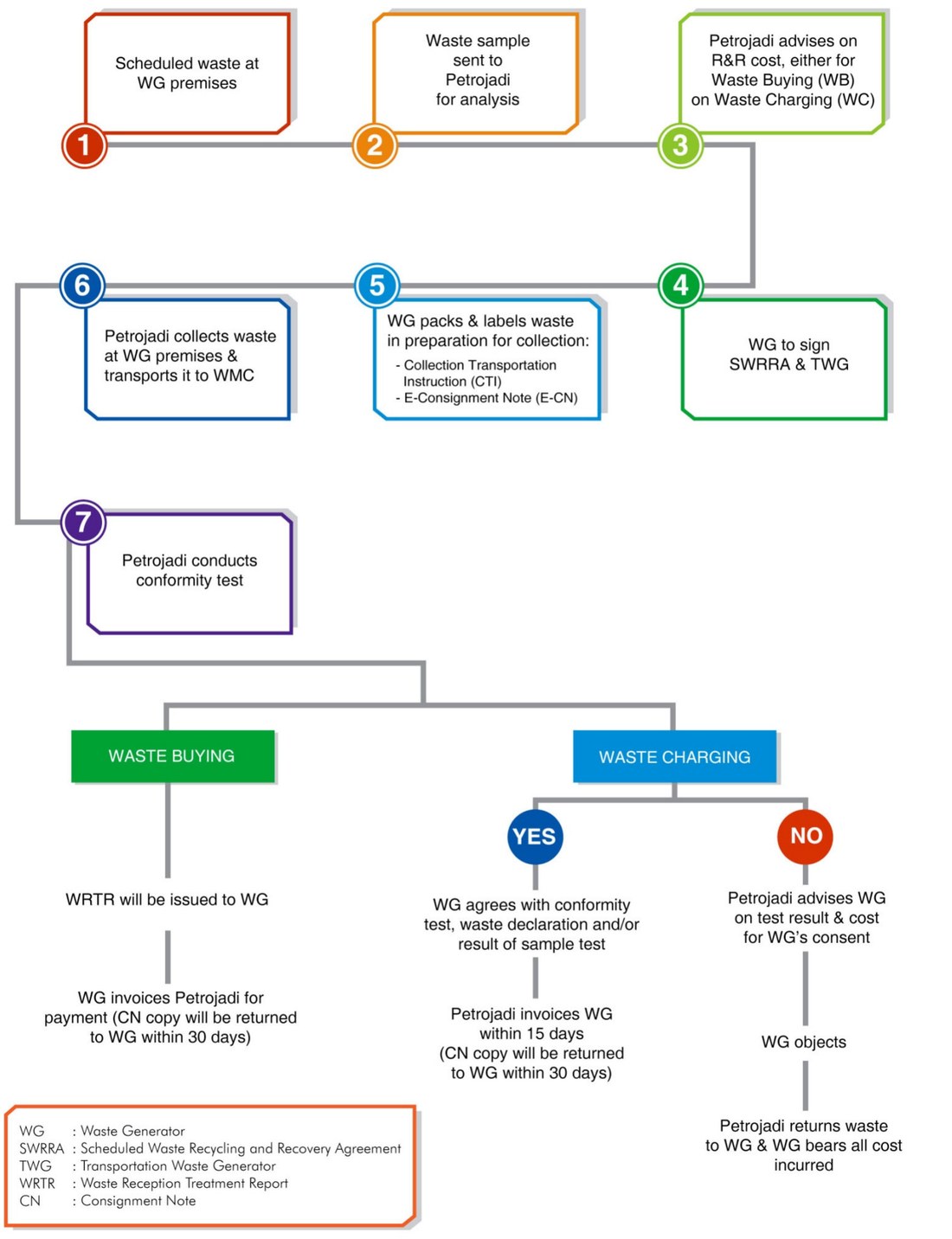
- The WG tells Petrojadi it wants to subscribe to our services.
- The WG sends a waste sample to Petrojadi for preliminary evaluation and analysis.
- The WG opens an account by signing the SWTTA or SWRRA agreement, and the TWG.
- Petrojadi returns the signed SWTTA or SWRRA to the WG.
- Petrojadi sends a preliminary quotation and advises the recycling and recovery (R&R) cost, either for waste buying (WB) or waste charging (WC).
- When the waste is ready, the WG contacts Petrojadi to arrange transport.
Collection
- The WG packs and labels the waste, or asks Petrojadi for packaging services.
- Once a collection date is agreed, Petrojadi sends a Collection Transportation Instruction (CTI) for the WG to acknowledge. On confirmation, Petrojadi instructs the Waste Management Centre (WMC), and the WG prepares the E-Consignment Note (E-CN).
- Petrojadi collects the waste at the WG's premises and transports it to the WMC. The WG is then notified through EIWIS of the status of treatment or disposal.
Conformity test and payment
After collection, Petrojadi runs a conformity test on the waste. What happens next depends on whether the waste has value (waste buying) or a cost to treat (waste charging).
Waste buying
Petrojadi issues a Waste Reception Treatment Report (WRTR) to the WG. The WG invoices Petrojadi for payment, and a copy of the consignment note is returned to the WG within 30 days.
Waste charging
If the WG agrees with the conformity test, waste declaration or sample test result, Petrojadi invoices the WG within 15 days. A copy of the consignment note is returned within 30 days.
If the result differs, Petrojadi advises the WG of the test result and cost for its consent. If the WG objects, Petrojadi returns the waste and the WG bears all costs incurred.
Abbreviations
- WG
- Waste generator
- SWTTA
- Scheduled Waste Transportation and Treatment Agreement
- SWRRA
- Scheduled Waste Recycling and Recovery Agreement
- TWG
- Transportation Waste Generator
- WMC
- Waste Management Centre
- R&R
- Recycling and recovery (cost)
- WB / WC
- Waste buying / waste charging
- CTI
- Collection Transportation Instruction
- E-CN
- E-Consignment Note
- CN
- Consignment Note
- WRTR
- Waste Reception Treatment Report
- EIWIS
- Electronic Integrated Waste Information System
Packaging
Proper packaging is vital for safe transport and handling of hazardous waste. The waste generator is responsible for the correct packaging, labelling, transportation and specification of the waste, as set out in the Environmental Quality (Scheduled Wastes) Regulations 2005.
Packaging must be durable, compatible with the waste and able to withstand transport by lorry. It must be leak-proof, and the container must not be weakened by bulging, corrosion or tear.
| Container | Suitable for | Condition required |
|---|---|---|
Bunghole drum (steel or plastic)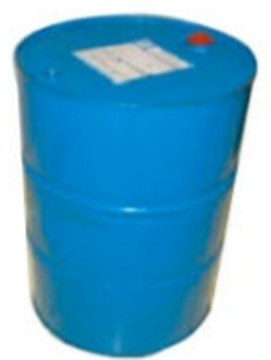 | Inorganic or organic liquid waste. Do not use steel drums for corrosive waste such as acids or alkalis. Plastic drums suit most solvents, but solvents such as diethyl ether and chloroform should go in steel drums. | No hole, no bulge, free of dent and corrosion |
Open top drum with cover and clamp (steel or plastic)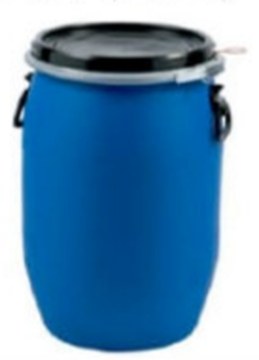 | Solid waste, for example sludge, e-waste, pharmaceutical and laboratory waste, contaminated gloves. Do not use steel drums for acidic or alkaline waste. | No hole, no bulge, free of dent and corrosion |
Intermediate bulk container (IBC)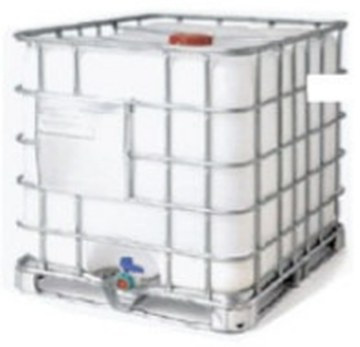 | A broad range of waste streams such as oils, solvents and acids. | No hole or crack |
Jerrican or carboy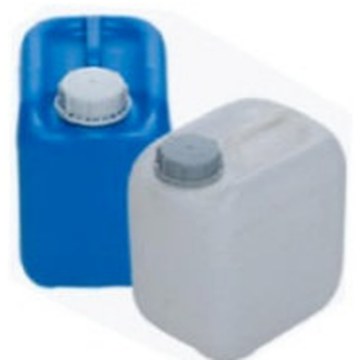 | Inorganic or organic liquid waste such as chemical wastes and solvents. | No hole or crack |
Clinical waste container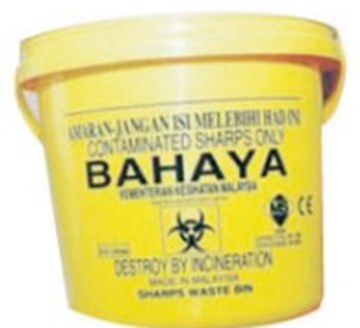 | Clinical and pathogenic wastes. | No hole or crack |
Corrugated or carton box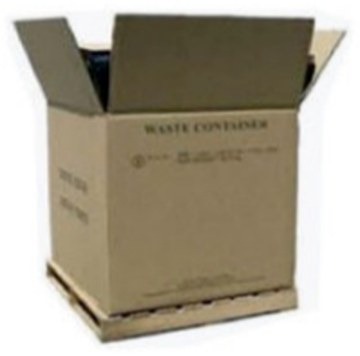 | Dry, solid waste with no free-flowing liquid, in small quantity, for example e-waste, contaminated rags, expired drugs, cosmetics. | No tear or hole |
Flexible intermediate bulk container (FIBC / jumbo bag)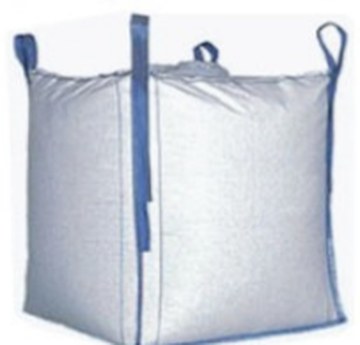 | Dry, solid waste with no free-flowing liquid, for example dust, slag, ash, clinker, e-waste, dry sludge, contaminated rags, garnet. | Preferably high density polyethylene (HDPE), double lined, filled to no more than 90% |
Standard packaging
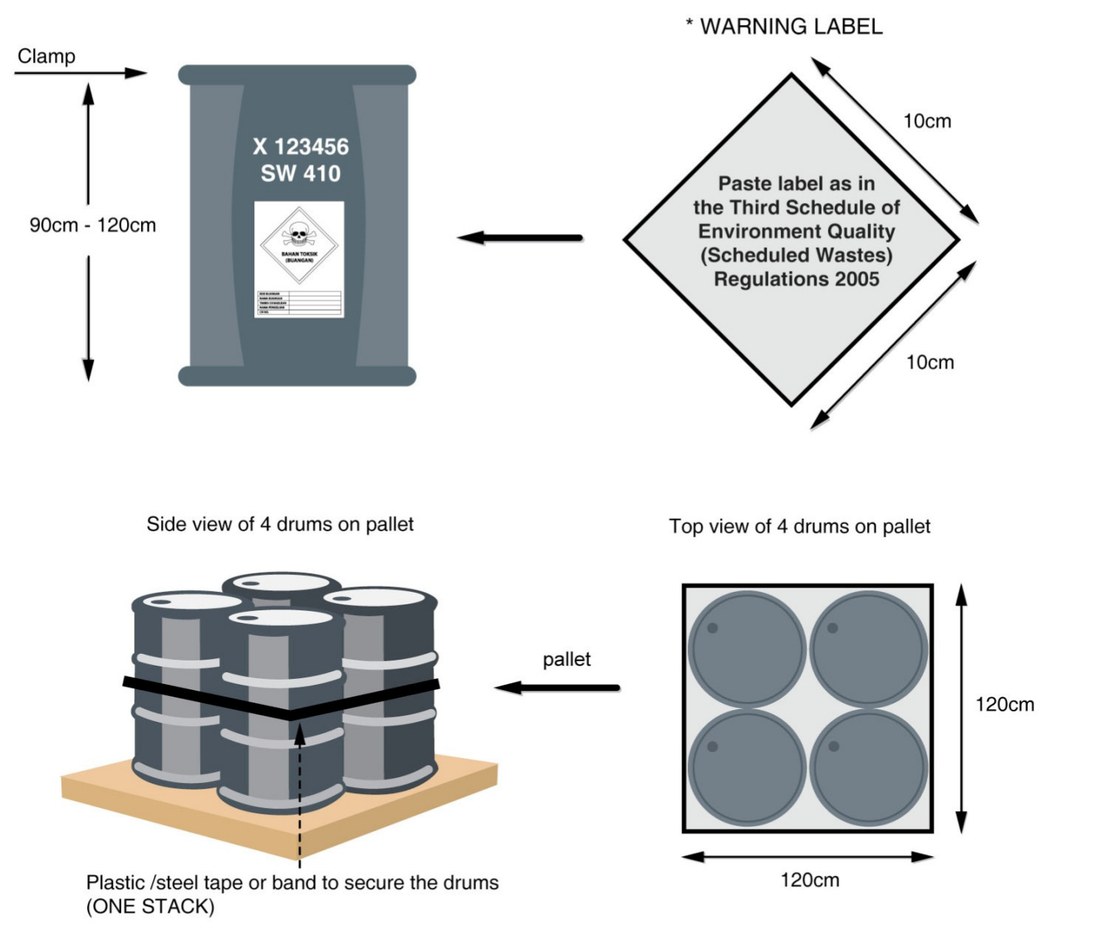
- Bunghole drum, for liquid waste. Maximum height 90 cm, diameter 60 cm. Fill to no more than 90%. A filled drum must not weigh more than 200 kg.
- Open top drum with clamp, for solid waste. Maximum height 90 cm, diameter 60 cm. Fill no closer than 10 cm from the top. Not for free fluids.
- One-tonne polypropylene (PP) bag. Must be double-lined. Fill no closer than 10 cm from the top. Not for free fluids.
- Pallet. Fasten all drums and bags securely on a good-condition pallet of 120 cm x 120 cm: four drums per pallet, or one PP bag per pallet. Secure drums with plastic or steel tape or band, in one stack.
Choosing by waste type
- Liquid organic or inorganic waste: bunghole drum (steel or plastic) or plastic pallet tank with stopper.
- Solid waste and empty contaminated containers: open top drums with covers and clamp.
- Dry solid waste and contaminated rags: one-tonne PP bags.
- Pharmaceutical and laboratory waste: open top drums with cover and clamp.
Lorry loading
| Lorry | Pallets |
|---|---|
| 3 tonne | 3 |
| 8 tonne | 10 |
| 12 tonne | 12 |
| 20 tonne | 18 |
Double stacking is allowed provided the total net weight does not exceed the vehicle's permitted weight.
Labelling
Labelling must follow Regulation 10 of the Environmental Quality (Scheduled Wastes) Regulations 2005. Warning labels are available from Petrojadi.
- Remove or erase all obsolete marks and hazard labels.
- Mark the side of the package with: name of waste generator; address and telephone number of waste generator; warning label; scheduled waste code; date of first waste generation; and consignment number.
- The label is square, set at an angle of 45 degrees (a diamond), and at least 10 cm by 10 cm unless the container is too small.
- It may be a stick-on, a metal plate, or stencilled or printed on the container.
- Labels must withstand open weather without substantial reduction.
- If waste has two or more hazards, identify all of them clearly and label accordingly.
- All markings must be clear and easy to identify.
Example marking
| X 123456 | X is the waste group, 123456 is the consignment code number |
|---|---|
| SW 410 | The scheduled waste code |
Paste the warning label as shown in the Third Schedule of the Environmental Quality (Scheduled Wastes) Regulations 2005.
Warning labels
The eleven labels in the Third Schedule (Regulation 10) of the Environmental Quality (Scheduled Wastes) Regulations 2005. Warning labels are available from Petrojadi.
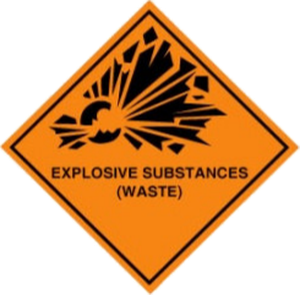
Label 1: Explosive substances
Exploding bomb symbol in black on a light orange background.
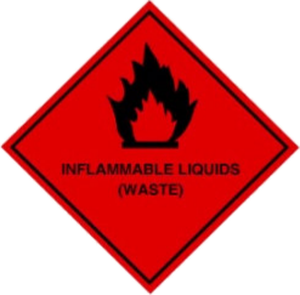
Label 2: Inflammable liquids
Flame symbol in black or white on a red background.
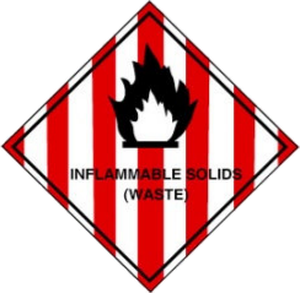
Label 3: Inflammable solids
Black flame symbol on a white background with vertical red stripes.
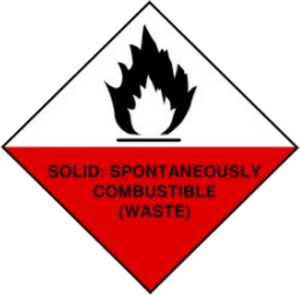
Label 4: Solid: spontaneously combustible
Black flame symbol; upper half white, lower half red.
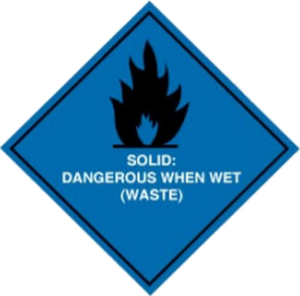
Label 5: Solid: dangerous when wet
Flame symbol in black or white on a blue background. For substances that give off flammable gases in contact with water.
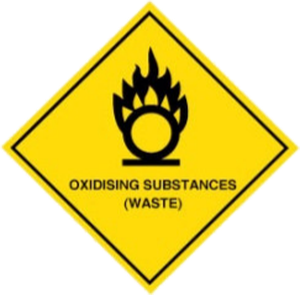
Label 6: Oxidising substances
Flame over circle symbol in black on a yellow background.
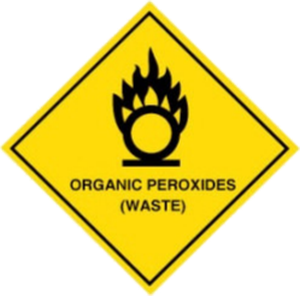
Label 7: Organic peroxides
Flame over circle symbol in black on a yellow background.
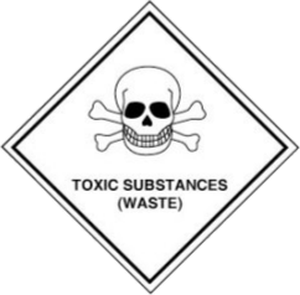
Label 8: Toxic substances
Skull and crossbones symbol in black on a white background. Poisonous (toxic) substances.
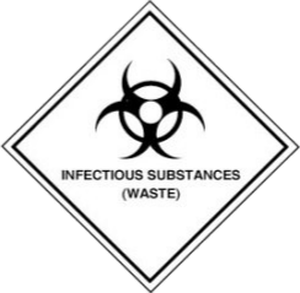
Label 9: Infectious substances
Three crescents superimposed on a circle, in black on a white background.
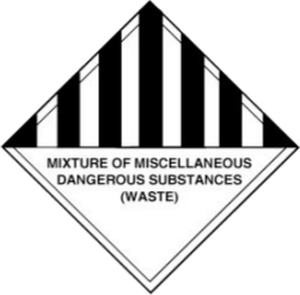
Label 10: Mixture of miscellaneous dangerous substances
Black vertical stripes on the upper half, white lower half, with a spilling-liquids symbol.
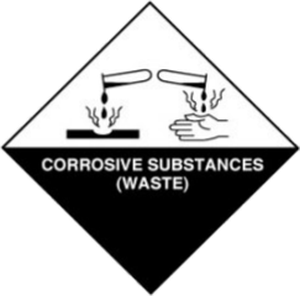
Label 11: Corrosive substances
Spilling-liquids symbol; upper half white, lower half black.
Wastes that must not be mixed
Mixing a waste in Group A with a waste in Group B of the same pair can have the consequences shown. Keep them in separate containers and separate storage.
| Pair | Group A | Group B | Potential consequences |
|---|---|---|---|
| 1 | Alkaline caustic liquids; alkaline cleaner; alkaline corrosive liquid; caustic wastewater; lime sludge and other corrosive alkalis | Acid sludge; chemical cleaners; electrolyte, acid; etching acid, liquid or solvent; pickling liquor and other corrosive acid; spent acid; spent mixed acid | Heat generation, violent reaction |
| 2 | Asbestos; beryllium; unrinsed pesticide containers; pesticides | Solvents; explosives; petroleum; oil and other flammable wastes | Release of toxic substances in case of fire or explosion |
| 3 | Aluminium; beryllium; calcium; lithium; magnesium; potassium; sodium; zinc powder and other reactive metals and metal hydrides | Any waste in Group 1-A or 1-B | Fire or explosion; generation of flammable hydrogen gas |
| 4 | Alcohols | Any concentrated waste in Group 1-A or 1-B; calcium; lithium; metal hydrides; potassium; sodium; water reactive wastes | Fire, explosion or heat generation; generation of flammable toxic gases |
| 5 | Alcohols; aldehydes; halogenated hydrocarbons; nitrated hydrocarbons; reactive organic compounds and solvents; unsaturated hydrocarbons | Concentrated Group 1-A or 1-B wastes; Group 3-A wastes | Fire, explosion or violent reaction |
| 6 | Spent cyanide and sulphide solution | Group 1-B wastes | Generation of toxic hydrogen cyanide or hydrogen sulphide gas |
| 7 | Chlorates and other strong oxidizers; chlorites; chromic acid; hypochlorites; nitrates; nitric acid; perchlorates; permanganates; peroxides | Organic acids; Group 2-B wastes; Group 3-B wastes; Group 5-A wastes and other flammable and combustible wastes | Fire, explosion or violent reaction |
Waste classification groups
Waste is grouped by type for handling and consignment. The group letter appears at the start of the consignment code on the label.
| Group | Waste type | Examples |
|---|---|---|
| A | Mineral oil waste | Waste containing lubricating oil, hydraulic oil |
| B | Organic chemical waste containing halogens and/or sulphur above 1% | Freon, PVC wastes, chloroform, solvents, capacitors and transformers containing PCB |
| C | Waste solvents containing halogens and/or sulphur below 1% | Acetone, alcohol (ethanol, methanol), benzene, turpentine, xylene. Waste should be pumpable, with under 50% water, 18 MJ/kg calorific value |
| H | Organic chemical waste containing halogens and/or sulphur below 1% | Glue, latex, paint, phenol, printing ink, synthetic oil, soap, epoxy |
| K | Waste containing mercury | Mercury, vapour lamps, COD fluids, mercury batteries |
| T | Pesticide waste | Insecticides, fungus and weed killers, rat poison |
| X | Inorganic waste | Acid, alkaline, sodium hypochlorite, inorganic salts, metal hydroxide sludge, chromate and cyanide waste |
| Z | Miscellaneous | Medicine waste, lab-packs, asbestos waste, mineral sludge, isocyanate (MDI, TDI), batteries |
Waste oil
Lubricating oil needs replacing at intervals, so engines, machinery and vehicles are a continuing source of waste oil. Other sources include machining and cutting oil emulsions, tank washings and sludges from storage tanks and refineries, oily bilge and ballast water, and oil from electrical equipment such as transformers and capacitors.
Waste oil can contain metals, chlorinated hydrocarbons and other organics that harm people and living organisms through inhalation, ingestion or skin contact. Oil from electrical equipment needs special care because it may contain polychlorinated biphenyls (PCBs), which are persistent, toxic and need a different regime of control and disposal.
Waste oil codes
- SW305: spent lubricating oil
- SW306: spent hydraulic oil
- SW307: spent mineral oil-water emulsion
- SW308: oil tanker sludges
- SW309: oil-water mixture such as ballast water
- SW310: sludge from mineral oil storage tank
- SW311: waste oil or oily sludges
- SW312: oily residue from automotive workshop, service station, oil or grease interceptor
- SW314: oil or sludge from oil refinery or petrochemical plant
Waste oil that still has economic value can be recovered by facilities licensed by the Department of Environment (www.doe.gov.my). Recovered or recycled oil that does not meet the required standard is still scheduled waste.
Tell us what you need to move, supply or fix.
Send us your waste details, fuel requirements or project scope and we will reply with a quotation.